
The Best Sleeping Positions for a Healthy Spine | Chiropractic Tips from Thomas Back and Body

Best Sleeping Positions for a Healthy Spine: Why They Matter More Than You Think
Many cases of persistent neck and back pain don’t start while exercising or working, but while you sleep. The position you sleep in for 6–8 hours each night can either support proper spinal alignment or place ongoing strain on your joints, muscles, and discs. Over time, even subtle stress from poor sleep posture can contribute to stiffness, tension, and chronic discomfort.
At Thomas Back and Body in Georgetown, Dr. Thomas frequently helps patients uncover how their sleeping habits are influencing their symptoms. By understanding and correcting sleep posture, many people can reduce pain, improve recovery, and support long-term spinal health.

The spine is not just a stack of bones; it’s a dynamic system that supports your body, protects your nerves, and connects your entire musculoskeletal structure. When you sleep in misaligned positions, you place undue stress on spinal joints, muscles, and discs. Over time, this can lead to stiffness, chronic pain, and poor posture. According to a study published in the Journal of Physical Therapy Science (2017), spinal alignment during sleep directly impacts musculoskeletal pain levels, especially in the lower back and neck.
Sleeping Positions for a Healthy Spine: What Chiropractors Recommend for Georgetown Residents
So, what are the best sleeping positions for a healthy spine? At Thomas Back and Body, we recommend sleeping on your back or side—never your stomach. Stomach sleeping can twist the neck and flatten the natural curve of the spine, leading to joint stress and morning stiffness. A study from Cary et.al (2019), reported that sleeping on your stomach increases the risk of developing lower back pain by 1.9 times. This demonstrates that stomach sleeping can misalign your spine’s natural alignment and lead to chronic back pain. Below are four chiropractic-approved sleeping positions you can try instead.

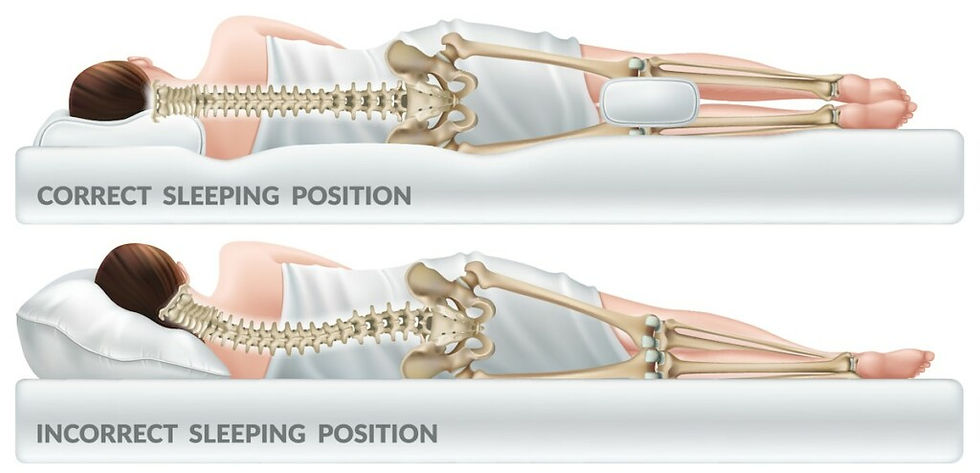
To maintain spinal alignment, your sleep position should support the natural curves of your neck, mid-back, and lower back. That's why Dr. Thomas recommends sleeping on your back or side with a pillow that keeps your neck in a neutral position.
Chiropractor-approved tips to Optimize your sleep:
Back sleepers: Place a pillow under your knees to reduce stress on the lower back and use a cervical pillow that supports the curve of your neck.
Side sleepers: Keep a pillow between your knees to align your hips and reduce lower back strain.
Use a chiropractic-approved pillow: Look for one that supports the natural curvature of your neck and keeps your spine in a neutral position.
Cool sleep environment: Studies (e.g., National Sleep Foundation) show that a room temperature between 16-19°C promotes deeper sleep and better muscle recovery.
Why Sleep Quality Matters for Spinal Health
Beyond position, your overall sleep quality affects how well your spine recovers overnight. When you sleep, your body enters phases of deep rest that allow muscles to repair, discs to rehydrate, and inflammation to reduce. Whether it's due to discomfort, poor habits, or improper support, poor sleep can interfere with this natural recovery process.
Regulating your Circadian Rhythm to Improve Sleep
Maintaining a regular circadian rhythm by going to bed and waking up at consistent times supports hormone regulation and tissue repair. A 2018 study published in Sleep Health confirmed that circadian rhythm disruption is linked to increased musculoskeletal pain and delayed healing.
Pairing good sleep habits with chiropractic care can dramatically improve outcomes. Chiropractic adjustments help restore proper spinal alignment, which makes it easier to sleep comfortably. At Thomas Back and Body, we often see patients who report fewer sleep disturbances and better posture after just a few sessions—especially when they combine care with improved sleep ergonomics.
Take the Next Step Toward Pain-Free Mornings
If you’re waking up sore, stiff, or tired, don’t ignore the signs. Your sleeping position may be quietly working against your spine. The good news? With the right habits, and your chiropractor's guidance, you can sleep smarter and feel better.
If you're ready for Dr. Thomas to help you realign your spine, improve your posture, and guide you toward healthier, pain-free sleep, then book an appointment at Thomas Back and Body today!
The information provided in our blog posts and articles is for educational and informational purposes only. It is not intended to replace individualized medical advice, diagnosis, or treatment. Always consult a qualified healthcare professional for personal health concerns or before starting any new wellness, exercise, or treatment program.
References
Cary, D., Briffa, K., & McKenna, L. (2019). Identifying relationships between sleep posture and non-specific spinal symptoms in adults: A scoping review. BMJ open, 9(6), e027633. https://doi.org/10.1136/bmjopen-2018-027633


Comments